


Does the 2026 Mitsubishi Outlander Sport offer real AWD advantages over the 2026 Chevrolet Trax around Schaumburg, IL?
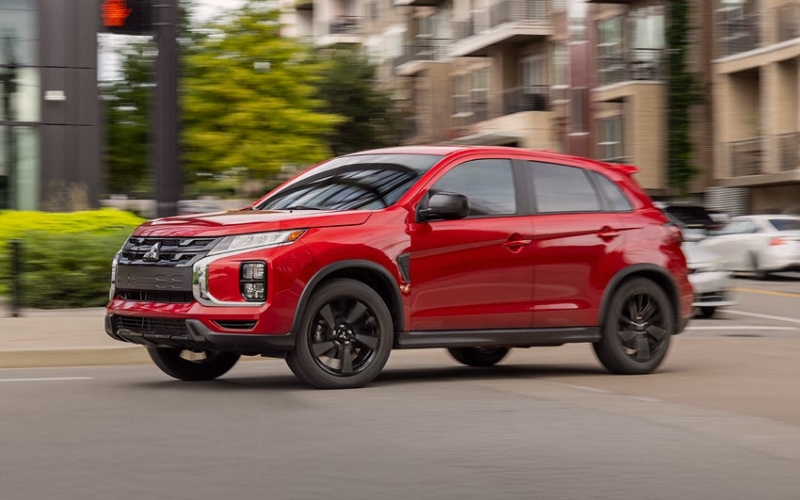
Biggers Mitsubishi – Does the 2026 Mitsubishi Outlander Sport offer real AWD advantages over the 2026 Chevrolet Trax around Schaumburg, IL?
When shoppers ask which small SUV feels more surefooted on everyday Chicagoland roads, the conversation quickly turns to traction and chassis tuning. The 2026 Mitsubishi Outlander Sport brings standard All-Wheel Control (AWC) and a multi-link rear suspension to every trim. The 2026 Chevrolet Trax sticks to front-wheel drive and a torsion-beam rear. On paper, that’s a clear philosophical split. On pavement—especially in shoulder seasons when wet leaves, cold rain, or a quick coating of snow meet patched asphalt near Meacham and Golf—the difference shows up in how confidently each SUV handles imperfect traction.
AWC continuously manages power delivery to all four wheels. That means fewer scrabbling front-tire moments from a green light, less drama easing across that lumpy, plow-created ridge at the end of your driveway, and more composed acceleration merging onto I-90. It’s not just about winter; AWC and a multi-link rear keep the Outlander Sport planted over mid-corner bumps, too, where torsion-beam setups tend to bounce and settle. The Trax counters with a torquey turbo engine that feels lively in town and standard wireless Apple CarPlay®/Android Auto for everyday ease. But when you rank the traits that defuse stress in mixed Midwest weather, traction and suspension composure sit near the top—two areas where Mitsubishi’s hardware advantage is hard to miss.
What you’ll feel from the driver’s seat
In real commuting around Schaumburg, turning from side streets onto Busse or skirting construction plates on Algonquin, AWC quietly smooths out the nuisances. You won’t think about a wheel slipping; you’ll just feel the SUV pull away with minimal fuss. The Outlander Sport’s 8.5 inches of ground clearance also helps with deep ruts, chunky alleys, and snow that piles up near plow turnarounds. Those “small” details add up to measurable confidence—especially when your schedule can’t wait for perfectly cleared streets.
The Trax has its strengths. Its cabin feels airy, the available 11-inch display looks sharp, and Chevy Safety Assist brings key driver aids like Automatic Emergency Braking and Lane Keep Assist. If you stay strictly on well-cleared avenues and spend most of your time at urban speeds, the Trax’s simplicity can be part of its charm. The question is whether that profile matches your day-to-day: do you ever detour through an unpaved lot for a youth game, navigate slushy intersections after work, or head out before the salt trucks catch up?
Chassis and suspension differences, simply explained
Why does a multi-link rear suspension matter? Each rear wheel gets a more sophisticated set of links that better manage bumps independently. That improves how the SUV tracks through ruts and broken pavement, and it keeps the body calmer when only one side hits an expansion joint. A torsion beam is durable and space-efficient, but it tends to transfer bumps from one wheel to the other. In everyday terms, Outlander Sport settles more quickly after a jolt and feels less skittish when the road is patchy or crowned, which is common in Chicagoland after winter freeze-thaw cycles.
AWC adds another layer. Instead of asking just the front tires to accelerate, brake, and steer, power can be routed to the rear to help share the workload. That balance translates to more neutral, predictable responses—handy when you need a crisp lane change around slower traffic near the I-90 on-ramps.
Technology and safety: what’s standard and what’s available
Both SUVs cover the essentials. The Outlander Sport features an 8.0-inch SDA system with Apple CarPlay® and Android Auto, Automatic Climate Control, front rain-sensing wipers, and a straightforward control layout that’s easy to use with light gloves. Standard safety includes Forward Collision Mitigation with Pedestrian Detection, Lane Departure Warning, Automatic High Beam, seven airbags, and a Rearview Camera, built on Mitsubishi’s RISE body construction. The Trax brings standard wireless smartphone integration, Chevy Safety Assist, and a clean, modern dash. For drivers who value wireless convenience, that’s a plus. For those who prioritize visibility in mixed precipitation, the Outlander Sport’s standard LED lighting and rain-sensing wipers are everyday helpers.
Ownership assurance is worth factoring in, too. Mitsubishi Motors backs the Outlander Sport with America’s Best-Backed Vehicle limited warranty coverage, including a 10-year/100,000-mile Powertrain Limited Warranty for original owners, plus 2-Year/30,000-Mile Limited Maintenance and 5 years of roadside assistance. That’s long-haul peace of mind for commutes that keep evolving as job sites and school schedules shift.
Test-drive tips for a fair AWD vs FWD comparison
To really feel the difference, plan a test route that includes a mix of surface types:
- Start with neighborhood streets featuring patched asphalt and mild crown.
- Add a few tight turns with visible pavement seams.
- Include a highway merge where you can accelerate deliberately and check stability while changing lanes.
- Finish with a stop on a slightly sloped surface to feel initial traction pull-away.
Note the steering correction you need, how each SUV tracks through bumps, and whether the traction control light flashes frequently when leaving a stop. In our experience, the Outlander Sport simply asks you to do less.
Frequently Asked Questions:
Is the 2026 Mitsubishi Outlander Sport all-wheel drive?
All-Wheel Control (AWC) is standard across the Outlander Sport lineup, so every trim delivers four-wheel traction from day one.
Does the 2026 Chevrolet Trax offer all-wheel drive?
No. The 2026 Trax is front-wheel drive only.
Which SUV has higher ground clearance?
The Outlander Sport offers approximately 8.5 inches of ground clearance, which helps with ruts, snow berms, and steeper driveway aprons.
Will I notice a suspension difference in daily driving?
Yes. The Outlander Sport’s multi-link rear suspension helps it track more cleanly over bumps and settle more smoothly after uneven impacts. The Trax’s torsion-beam rear emphasizes simplicity and packaging, but it can feel busier over rough patches.
What about technology and comfort features?
Trax highlights include standard wireless Apple CarPlay®/Android Auto and an available 11-inch display. Outlander Sport emphasizes everyday practicality with an 8.0-inch SDA system, Automatic Climate Control, available heated front seats, and standard rain-sensing wipers.
When it comes to real traction and chassis composure, the Outlander Sport’s hardware plays in your favor through the full Midwest calendar, not just the winter months. If you’re mapping out test drives, set up back-to-back time so you can feel the differences where they count. Biggers Mitsubishi, serving South Elgin, Schaumburg, and Hoffman Estates, can help you plan a route that replicates your daily drive and answer nuanced questions about trims and features. For a single point of comparison—traction you can trust—AWC and the Outlander Sport’s chassis tuning make the case clearly.
Ready to take a closer look? Schedule a drive and bring your real-world routes. You’ll know within a few blocks which SUV takes stress out of the commute.
Biggers Mitsubishi is here to help you choose confidently and get the most from your next small SUV.
0 comment(s) so far on Does the 2026 Mitsubishi Outlander Sport offer real AWD advantages over the 2026 Chevrolet Trax around Schaumburg, IL?